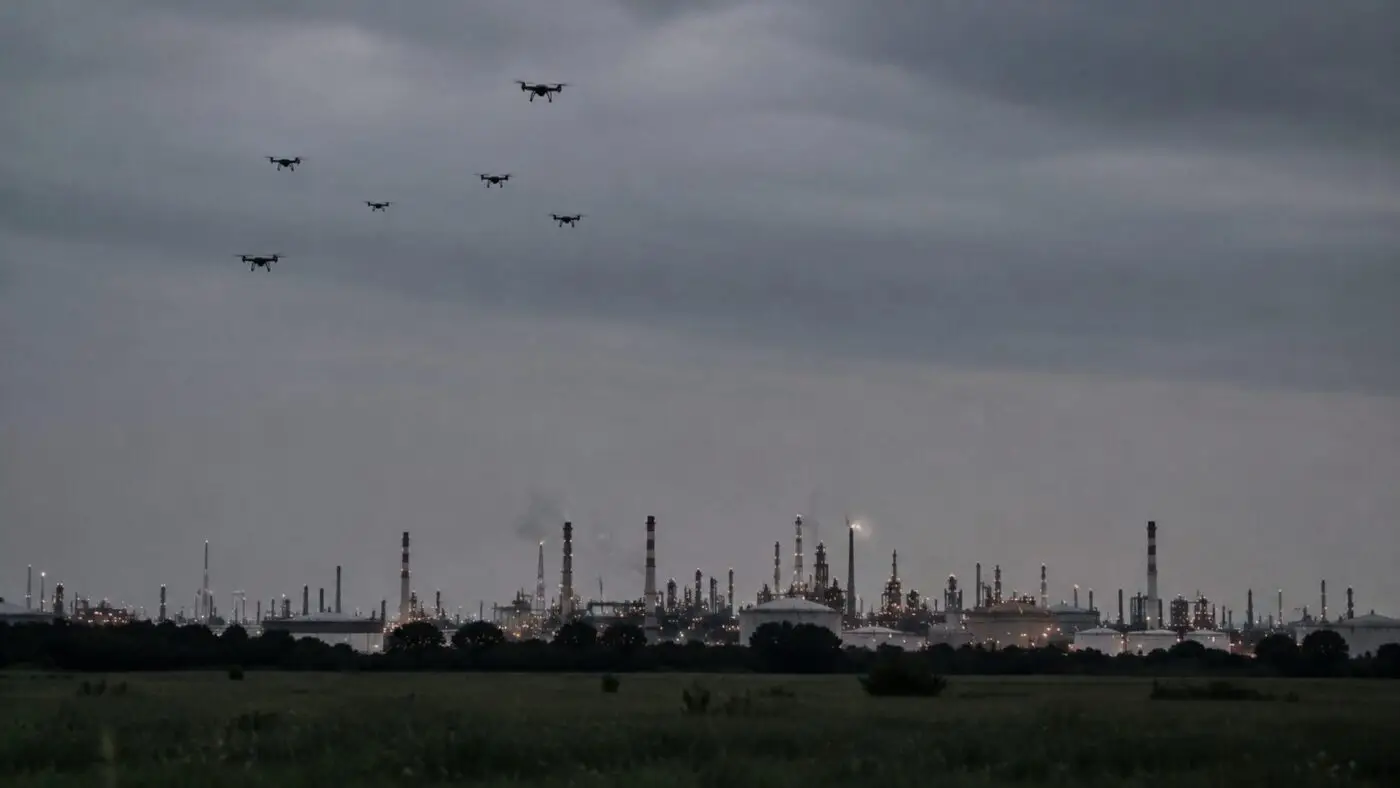
US and French intelligence reportedly helps Ukrainian forces avoid air defences and identify equipment that can keep refineries offline longer.
Ukraine has shifted its long-range drone campaign toward critical parts of Russian oil refineries that are difficult to replace, the Financial Times (FT) reported. Ukraine targets Russian refinery components to keep plants offline longer, rather than causing temporary fires or damaging storage tanks.
Ukrainian drone operators told the FT that their units will continue striking the same equipment again before repairs are finished. This is overall a very difficult situation to be in for the Kremlin.
Because the Kremlin shown to everyone how incapable their military is in protecting Moscow, of all cities, odds are problems involving their refineries will continue, as Kremlin has no reliable way in shooting down either all the drones or missiles. Further, based on the refinining capacity of these refineries, the economic loss varies.
In general, the losses range between $10 million every day. On the other hand, the economic impact from refineries that refined around 300 to 400 thousand barrels a day and were forced to shut down, these losses can surpass the $15 million mark a day.
Ukraine targets Russian refinery components with intelligence support of the US and France.
Some quite interesting information surfaced. Turns out, Ukrainian officials said intelligence from the United States and France helped map Russian air-defense positions and improve targeting capabilities. The information reportedly allowed planners to choose drone routes that could avoid defensive systems and identify where attacks would cause longer disruption.
Further, the FT reported in early July that US intelligence assistance had played a role in strikes on Russian refineries, including facilities far from the front line. It is one of the latest reports indicating that French intelligence had also had something to do with this, which is quite interesting.
At the same time, Defence Minister Yevhenii Khmara said Ukraine would scale up operations that were already proving effective. Though the real question mainly revolves around drone production, the larger the production, the bigger the impact the Kremlin will feel on its petroleum-based economic revenue.
Robert Brovdi, commander of Ukraine’s Unmanned Systems Forces, said the attacks aim to damage revenue from Russian oil trade and disrupt the military-industrial complex. He also linked the campaign to strikes on Russian air defense, radar, and electronic warfare systems.
Former defense minister Andriy Zagorodnyuk described the approach as “systemic warfare,” treating Russia’s energy sector as an interconnected network, or how I refer to it, as being a chain. You create weakness in the chain; the entire system gets affected. Andriy said repeated strikes were designed to stop damaged infrastructure from returning to service quickly.
Russia’s economy is very easy to sabotage as most of it relies on funds from energy sales. The civilian sector is pretty well completely dead in Russia. It has been this way for a long time.
Anyway, the General Staff of Ukraine has not disclosed its future targets. Brovdi said the campaign would intensify, while the effect on refinery operations and Russia’s ability to repair or defend the facilities remains uncertain.
-
 Why Democracies Repeat the Cycles That Bring Them Down
 -
 Ukraine Targets Critical Parts of Russian Oil Refineries
 -
 Used Electric Car Sales in Russia Rise Nearly 40% In 2026
 -
 Ukraine says drones hit Russian refineries and Wildberries site in Ryazan.
 -
 Russian Military Outlet Calls for Nationwide Air Defense Overhaul Amid Drone Threat