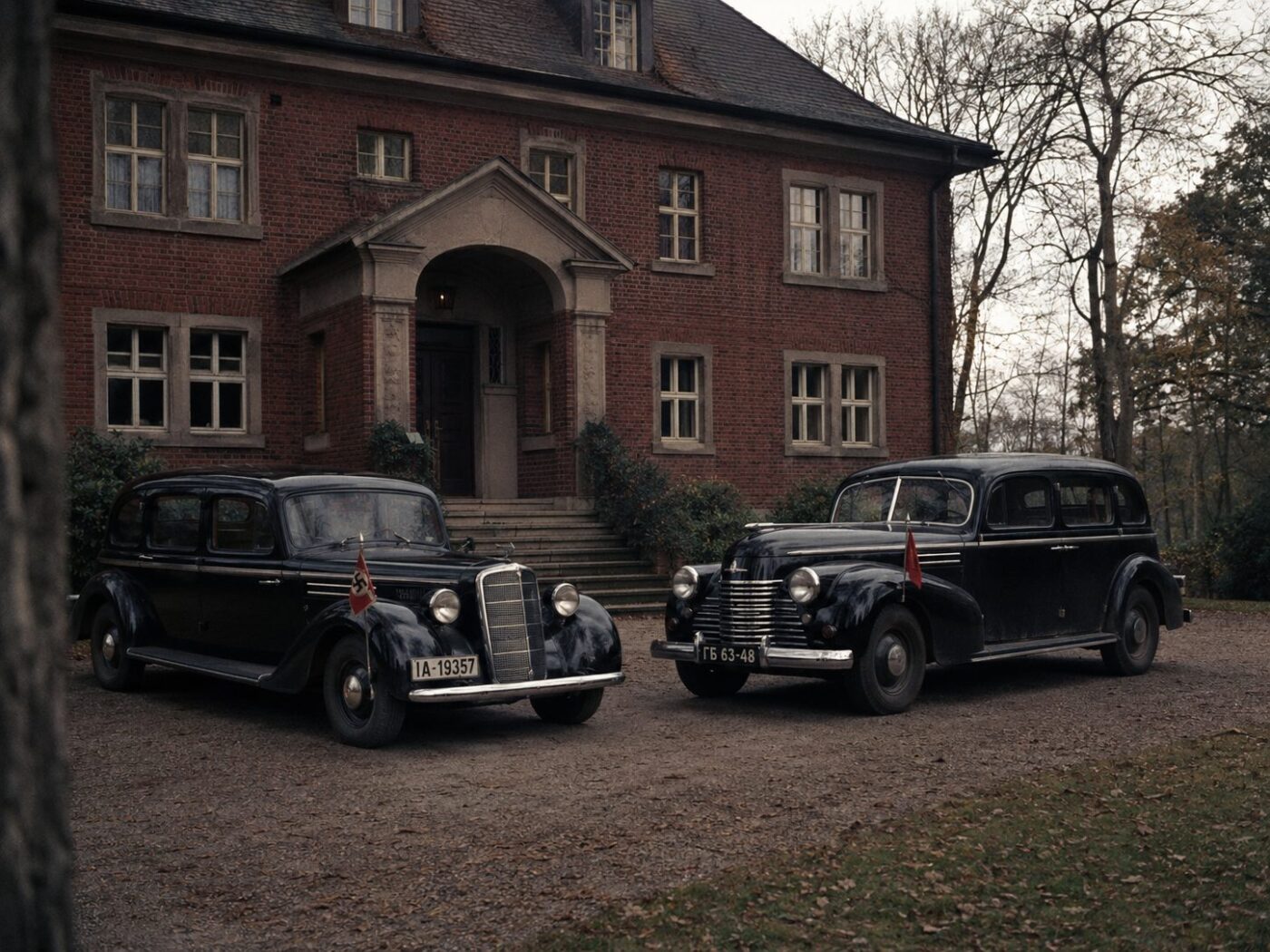
In September 1938, Adolf Hitler told British and French negotiators in Munich that the Sudetenland was his last demand in Europe. Six months later, German troops occupied the rest of Czechoslovakia. In September 2022, Vladimir Putin annexed four Ukrainian regions after staged referenda, following the 2014 seizure of Crimea that Moscow had framed at the time as a one-off, defensive move. The gap between the two moments is eighty years. Yet, they follow an identical pattern.
Joseph Goebbels ran Nazi Germany’s propaganda through radio, film, and the party press, repeating a simplified version of events until it hardened into common belief among Germans who had no other source to check it against. Russia runs the same operation with newer tools. RT and Sputnik carry the Kremlin’s line into dozens of languages abroad. TASS, for instance, and state television do that at home.
According to a U.S. Global Engagement Center report, outlets tied to Russia’s intelligence services, including the FSB-linked News Front and the SVR-directed Strategic Culture Foundation, echo the same stuff Nazi regime did, so that one claim appears to be independently confirmed by several outlets when it in fact has one source.
Both systems lean on the same trick: accuse the target of the crime you are about to commit. Nazi propaganda cast Czechoslovakia as the aggressor mistreating its German minority. Kremlin was making such equivalent claims before its own invasion too, claiming Ukraine was preparing a chemical attack and a “crushing strike” on its own nuclear plants, for instance.
Hitler’s claim on Czechoslovakia and Austria rested on a premise, not a fact: that these were not real nations, only artificial states holding land that was rightfully German. Putin has used close to the same words about Ukraine.
In 2008 he told a NATO summit Ukraine was “not even a state.” In 2021 he published a long essay arguing Russians and Ukrainians are “one people.” Russian officials in short have floated the same “denazification” logic for Kazakhstan and Moldova, treating the borders of the former Soviet Union as a matter still open for discussion. Same thing applies to the three Baltic States too.
Hitler justified his 1938 ultimatum by claiming ethnic Germans in the Sudetenland needed rescue from persecution. Putin’s February 2022 invasion speech ran the same argument: Ukraine was committing “genocide” in Donbas, and “denazification” was required to stop it.
Interestingly, Council of Europe, the UN Human Rights Office, US intelligence services all investigated and found no evidence for such claims. There never was any.
Jonathan Eyal of the Royal United Services Institute predicted, ahead of the 2014 annexation, that Russia would invoke ethnic Russians as a pretext for taking territory, and he called it in advance Russia’s “Sudetenland option.” So in a way, Kremlin is following a predictable pattern.
Germany’s finance minister at the time, Wolfgang Schäuble, told a group of visiting students that Putin’s justification for taking Crimea sounds the same as the one Hitler used for the Sudetenland.
What followed in both cases was the same shape: a first move sold as limited and defensive, then a second, larger move once the world had absorbed the first one. Chamberlain flew home from Munich in 1938 and told the British public it meant “peace for our time.” Yet, Crimea in 2014 was framed by Kremlin as protecting Russian speakers, not as widening the scale of war.
The Kremlin has also repeatedly described its actions as limited, defensive or necessary, only for its demands and territorial ambitions to expand later, in hope of deceiving Ukraine’s allies, resulting in delays in delivered supplies to the Ukrainian armed forces.
I think it’s safe to assume that only the technology has changed. Propaganda now moves through television networks, anonymous websites, diplomatic accounts, influencers and social media platforms rather than radio alone. But such misinformation campaigns remain the same: create confusion, erase the victim’s legitimacy, disguise aggression as protection and persuade foreign audiences that resistance is more dangerous than surrender. Very alarming.
-
 The Same Held Values, Eighty Years Apart: Nazi and Kremlin Propaganda
 -
 Russia's Gasoline Export Ban Extended to January 2027
 -
 Yet Another Wildberries Warehouse Catches Fire in Volgograd After Ukraine's Raids.
 -
 Russian Lower-Grade Euro-3 Fuel Gets Introduced – What You Need To Know.
 -
 Tusk: Poland Was Not Target of Russian Missile