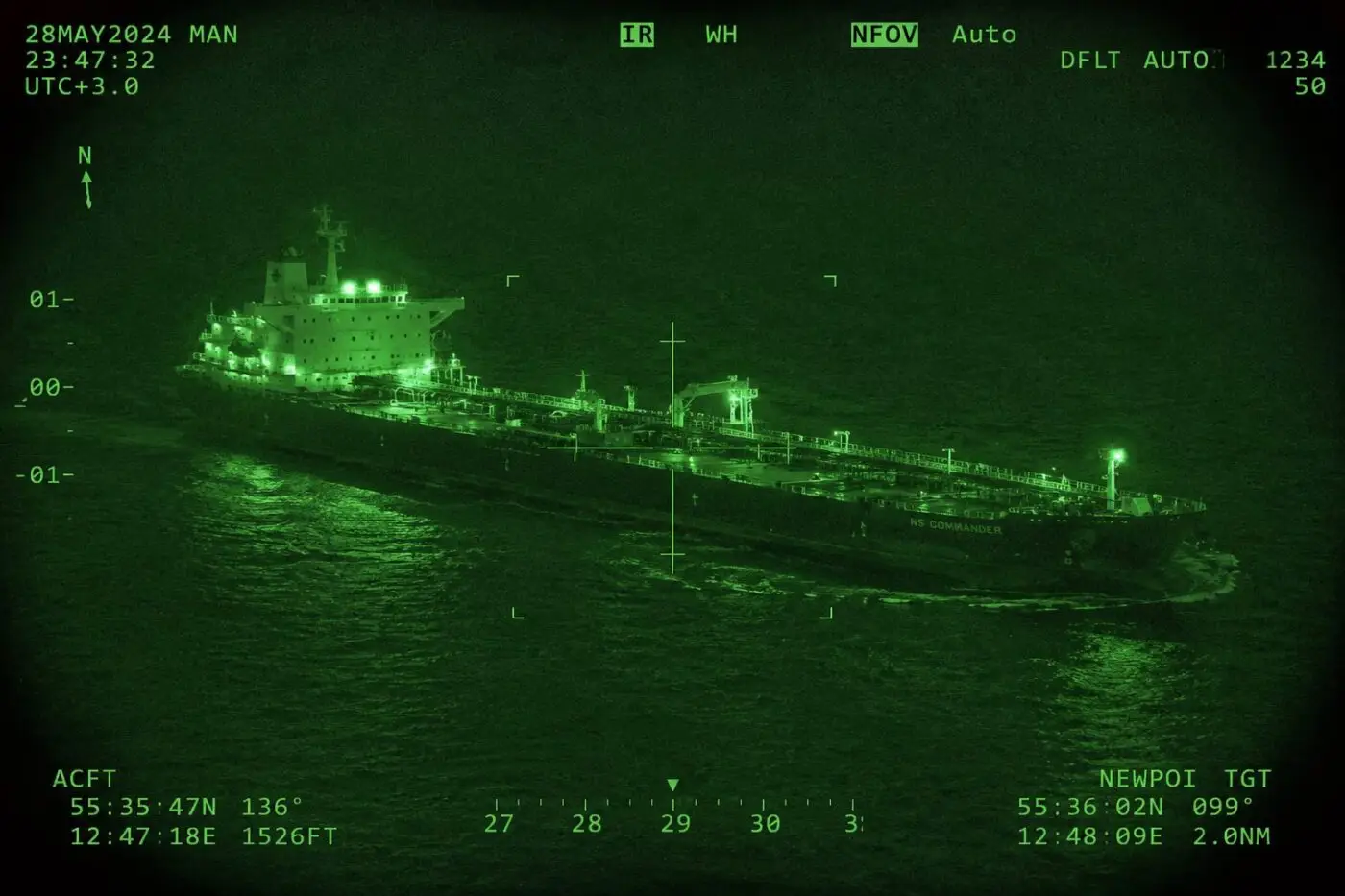
Ukrainian forces say the three-week campaign has disrupted shipping through the Kerch Strait and targeted Russia’s sanctions-evasion network.
Ukraine’s Unmanned Systems Forces say they have struck more than 200 vessels linked to Russia’s so-called shadow fleet during a three-week operation in the Black and Azov seas, claiming the campaign has severely disrupted maritime logistics around the Kerch Strait.
According to Major Robert Brovdi, known by the callsign “Magyar,” Operation MoLoChKa has damaged 201 vessels since early July. The military says 129 ships were hit in the Sea of Azov and another 72 in the Black Sea. Brovdi added that these figures do not include vessels reportedly targeted by the Security Service of Ukraine (SBU) or other Ukrainian defense units during the same period.
Ukrainian officials say the operation focused on ships used to transport Russian oil and other cargo while bypassing international sanctions. They also claim the campaign has forced commercial traffic through the Kerch Strait to stop indefinitely after many vessels were destroyed or left inoperable.
Kyiv argues the disruption extends beyond oil exports. The operation is also said to have affected grain shipments from the Sea of Azov, limited cargo movements from ports in occupied territories, reduced ferry capacity linking occupied Crimea with mainland Russia, and weakened smaller transport vessels that support larger export tankers.
Ukraine further claims Russia has been forced to redeploy air defense systems and drone units from frontline positions to protect remaining maritime routes. Overall, the economic consequences of these attacks are detrimental to say the least.
Russian own war-correspondents have been raising questions as to how the Russian Navy could have allowed it. Though, at the end of the day, a country without Navy managed to wipe out more than 1/3 of Russia’s black sea fleet… Lastly, why don’t we take a look at what a Telegram channel with over 316,000 followers, reported one hour ago:
“Defeating the enemy is unthinkable without a radical change in the situation in the Black Sea, where our fleet, deprived of its flagship, is confined to bays and serving primarily as missile launch pads. Promises from star-studded heroes on Navy Day, I believe, are not enough. Submarines armed with Tsirkon missiles will undoubtedly ply the world’s oceans in the future, but driving the enemy into the Black Sea should have been done yesterday, as should the creation of unmanned divisions there, first and foremost.”
Well, that summs it up…
-
 Russian Military Outlet Calls for Nationwide Air Defense Overhaul Amid Drone Threat
 -
 Ukraine Claims More Than 200 Russian 'Shadow Fleet' Vessels Hit in Kerch Strait Operation
 -
 U.S. Senate Moves Forward With New Russia and Iran Sanctions Bill
 -
 Ukraine Strikes $500 Million Russian S-400 System in Crimea
 -
 Zelenskyy Says Russia Is Preparing to Receive 30,000 More North Korean Troops